
Skip to product list 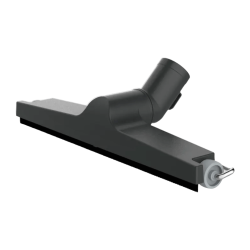
Accessories
Vacuum Cleaner Accessories
14 products
An industrial vacuum consumes three things at three different rates: the filter, the bag and the hose. The filter decides how much the machine actually collects; the bag decides whether it can be emptied without putting the dust straight back into the air; the hose wears faster than anything else outside the housing.
14 products
S8045
Toolsa Floor Nozzle With Brush For Industrial Vacuum Cleaner (⌀50 × 455 mm)
- TAMC2000 | TAMC3000 | TAAC3200
- 455 mm
- Plastik
zł184.50 150,00 zł net At your place on Monday
S8057
Toolsa Auto Clean Pre-Filter For DC3600, 3020T, AC32, AC750, AC800, AC900
- Toolsa DC3600, 3020T, AC32, AC750, AC800, AC900
zł608.85 495,00 zł net At your place on Monday
TAS8035/4
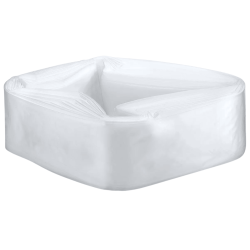
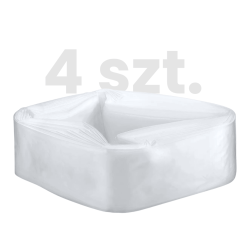
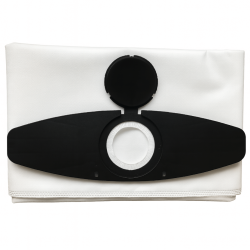
Toolsa Vacuum Cleaner Bag (4 Pcs.)
- 68-70 μm
- 20 m
zł479.70 390,00 zł net At your place on Monday
TAS8096
Toolsa TAAC15 Vacuum Cleaner Bags (5 Pcs)
- TAAC15.
zł166.05 135,00 zł net At your place on Monday
TAS1070
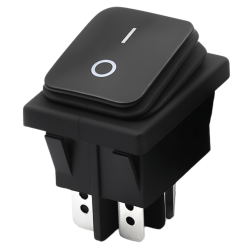
Toolsa Vacuum Cleaner Motor Switch
- TAMC2000, TAMC3000, TAAC3200
- 30 A
zł110.70 90,00 zł net At your place on Monday
B0003
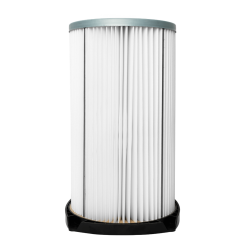
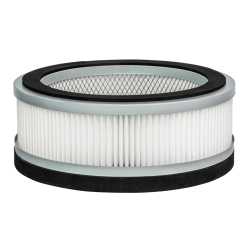
Toolsa HEPA H12 Filter For TWC-3/90
- Toolsa TWC-3/90
zł307.50 250,00 zł net At your place on Monday
S8008
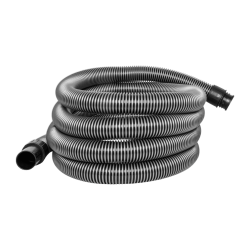
Toolsa Industrial Vacuum Cleaner Hose (⌀50 mm | 7.5 m | Antistatic EVA)
- TAMC2000 | TAMC3000 | TAAC3200
- 7,5 m
- EVA
zł492.00 400,00 zł net At your place on Monday
TAS1065
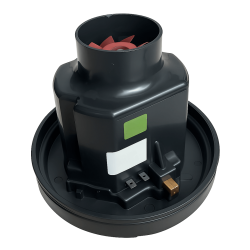
Toolsa TAAC15 Vacuum Cleaner Motor (1.2 Kw | 230 V)
- TAAC15.
- Jednofazowy
- 230 v
zł356.70 290,00 zł net At your place on Monday
Manufacturer, not a middleman Toolsa machines are ours — we know them from the design side, not from a catalogue.
Service and parts on site Wearing parts stay in our warehouse — the machine does not wait for a delivery from abroad.
Dispatch with a real date Every item shows the delivery day, not “24–48 h”.
Matched to your site Tell us the layer and the area — we will match the machine and the tooling. +48 732 081 091
Filters
Price zł
Availability
Sort
Available here: HEPA H13 and H12 filters, conical filters for the TAMC2000 (S26) and TAMC3000 (S36), an Auto Clean pre-filter, bags in packs of 4 and 5, a 7.5 m antistatic suction hose ⌀ 50 mm, a ⌀ 50 × 455 mm floor nozzle with brush, and the automatic front nozzle for the TWC-3/90.
There are also parts nobody buys in advance but without which the machine stops: a motor for the TAAC15 and a motor switch.
Read moreShow less
Filters are matched to a specific model, not to a filtration class. The machines are in industrial vacuum cleaners.
The filter decides performance, not the motor
A vacuum with a loaded filter sounds like a new one and draws similar current, but collects a fraction of what it should. Dust settles on the cartridge from the first minute, resistance climbs and airflow falls — gradually, so nobody notices the moment the machine stopped doing its job.
That makes the filter the most important item here, not an accessory. HEPA H13 captures over 99.95% of particles at 0.3 μm — the fraction that is hardest to catch and most dangerous to the lungs. H12, used on the TWC-3/90, is less efficient and answers a different application: a wet and slurry machine does not work in carcinogenic dust.
The pre-filter in Auto Clean systems has its own role: it holds back the coarse fraction before it reaches the main cartridge, and in practice it is what determines how long the HEPA lasts.
What fits which model
| Part | For model | Note |
|---|---|---|
| HEPA H13 filter | class H extractors | > 99.95% @ 0.3 μm |
| HEPA filter for TAAC15 | TAAC15 | dedicated cartridge |
| HEPA H12 filter | TWC-3/90 | wet machine |
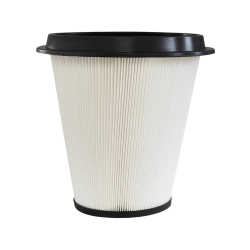
| Conical filter S26 | TAMC2000 | — |
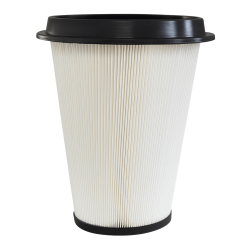
| Conical filter S36 | TAMC3000 | — |
| Auto Clean pre-filter | Auto Clean systems | protects main cartridge |
| Bags (4 pcs) · single | Toolsa extractors | clean emptying |
| TAAC15 bags (5 pcs) | TAAC15 | — |
| Antistatic hose 7.5 m | ⌀ 50 mm inlet | reinforced |
| Floor nozzle 455 mm | ⌀ 50 mm hose | brush and wheels |
| Automatic front nozzle | TWC-3/90 | slurry behind a grinder |
| Motor 1.2 kW · switch | TAAC15 | service parts |
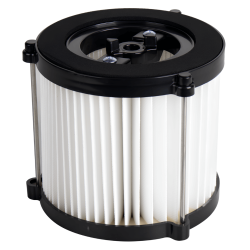
Conical filters are model-specific: S26 fits the TAMC2000 and S36 the TAMC3000, and they are not interchangeable. Quote the machine designation when ordering, not the filtration class — two machines of the same class H can take entirely different cartridges.
Bag or no bag
Working without a bag is cheaper and, with coarse debris, more convenient — tip the container out and carry on. With class H dust that approach stops making sense, and not because of the mess.
A class H machine retains over 99.995% of the dust it draws in precisely so that it does not return to the air. Tipping the container into a bin undoes that in seconds: the entire fine fraction the machine captured goes back up, this time right next to the operator. Where the dust contains crystalline silica, the bag is not a convenience but the final part of the same protection as the filter.
So the working rule is simple: construction dust — with a bag; coarse debris and water — without. Bags come in packs of 4 and 5, depending on model.
Why the hose has to be antistatic
Dust travelling through a hose at tens of metres per second rubs against its walls and picks up a static charge — both the dust and the hose. Charge builds faster the drier the material and the higher the airflow, which is exactly the working condition of an extractor on a concrete grinder.
Three consequences follow, all of them a nuisance. The hose attracts dust to itself and everything around it instead of transporting it. The operator gets a discharge at every touch — harmless in itself, but genuinely dangerous on a ladder because of the reflex. And in an environment with combustible dust a spark is an ignition source.
An antistatic hose carries a conductive layer in its wall that drains the charge to the machine housing. Ours is 7.5 m long, ⌀ 50 mm and reinforced — pick length with some margin but not excess: every metre of hose is resistance, meaning less airflow at the far end.
When to replace
Filter — when cleaning stops helping
There is no hours figure, because loading rate depends on the material: quartz hardener dust kills a cartridge many times faster than plaster dust. The signal is that after shaking down, or after an Auto Clean cycle, the machine still pulls weakly. Cartridges are replaced as a set, so resistance stays even across all of them — one new filter among loaded ones takes the whole flow and loads at an accelerated rate.
Hose — at the first chafe
A hose dragged across a floor chafes on the outside of its bends and at the couplings. A leak in the hose means air drawn in from the side instead of from the tool, so suction drops along the whole length — and on a class H extractor it also means dust escaping outside the filtration.
Bag — before it is completely full
A full bag restricts airflow just as a loaded filter does, only sooner. The practical limit is about three quarters of capacity; past that the machine runs louder and collects less, and changing it becomes more likely to tear.
Questions and answers
How do you choose a filter for an industrial vacuum?
A filter is matched to a specific machine model, not to a filtration class. Conical filters are assigned directly: S26 fits the TAMC2000 and S36 the TAMC3000, and they are not interchangeable even though both machines are dust class H. The TAAC15 takes its own HEPA cartridge, and the TWC-3/90 an H12 filter built for damp work. Quote the machine designation when ordering, not the class or a dimension.
What is the difference between a HEPA H13 and an H12 filter?
How much of the finest fraction they hold back. H13 captures over 99.95% of particles at 0.3 μm; H12 captures less. In practice H13 is the cartridge for extractors working in construction dust, which carries carcinogenic crystalline silica, while H12 is used on the wet and slurry machine, where the hazard is different in nature. Substituting the other way — H12 in place of H13 in a class H extractor — drops protection below the required level.
When should a filter be replaced rather than cleaned?
Cleaning is enough as long as it restores airflow. If the machine still pulls weakly after the cartridge has been shaken down or after an Auto Clean cycle, the filter is finished — dust has embedded in the structure and will not shake out. There is no single hours figure, because the rate depends on the material: quartz hardener and concrete dust destroy a cartridge many times faster than plaster dust. Filters are replaced as a set.
Do you have to use a bag?
With construction dust, yes, and not for convenience. A class H machine retains over 99.995% of the dust it draws in so that it does not return to the air; tipping the container into a bin undoes that within seconds, right beside the operator. With coarse debris and wet work, a bag is not needed. Bags come in packs of 4 and 5, depending on the machine.
Why does a vacuum need an antistatic suction hose?
Dust travelling through a hose rubs against its walls and picks up a static charge — the more so the drier the material and the higher the airflow. A charged hose attracts dust instead of transporting it, and the operator gets a discharge at every touch, which on a ladder is dangerous through the reflex alone. An antistatic hose has a conductive layer in its wall that drains the charge to the machine housing.
What hose length should you choose?
Enough for your working radius, with margin but not excess, because every metre of hose is flow resistance and less collection at the far end. A 7.5 m hose at 50 mm diameter covers the typical radius around a floor machine. Diameter often matters more than length: a hose that is too narrow throttles airflow whatever the motor rating, so compare the extractor inlet with the tool shroud outlet.
What is the automatic front suction nozzle?
It is a nozzle for the TWC-3/90 that collects slurry continuously, at the rate a wet grinder produces it. That matters because cement fines mixed with water harden once they stand and bond to the floor — from a settled puddle you recover only the water. The nozzle lets collection run alongside the machine instead of cleaning up after it.
Are spare parts available for Toolsa vacuums?
Yes — besides consumables, the range includes service parts: a 1.2 kW motor for the TAAC15 and a motor switch. These are items nobody buys in advance but without which the machine stops, and replacement is cheaper and quicker than a service repair. Conical filters for the TAMC2000 and TAMC3000 are likewise treated as model-specific parts rather than universal accessories.
Related categories
The machines this tooling fits are in industrial vacuum cleaners, and split by job in vacuums for grinders and scarifiers and wet and slurry vacuums. The tools that create this dust are in concrete grinders.
Essential cookies keep your cart and login working — the shop will not run without them. The rest let us measure traffic and target our ads, and we switch them on only with your consent. You can change your choice at any time using the “Cookie settings” link in the footer. Cookie policy
Settings
Essential
Cart, login, form security and remembering this choice. The shop will not work without them, so they need no consent.
Toolsa
Analytics
We count page views and checkout paths to find what is broken in the shop. We look at the data in aggregate.
Google Analytics · Microsoft Clarity
Marketing
We show our ads outside the shop and check which of them lead to a purchase. Phone callback requests land here too.
Google Ads · OptinMonster · Zadarma