More options XTE2-XP38TA
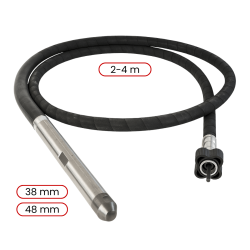
Wąż z buławą XP (38 mm) do betonu Toolsa XT-E (2 - 4 m)
- 38 mm | 48 mm
- Enar DINGO ,Toolsa STORM 2300, BT Humdinger
- Gniazdo kwadratowe żeńskie (7 mm)
zł947.10 770,00 zł net On order
An internal vibrator is three parts wearing at three different rates. The drive never touches concrete and lasts for years. The flexible shaft — inside a protective hose — carries the rotation and works in torsion at every insertion. The poker head sits in the mix, abrades against aggregate, and is the first to go.
11 products
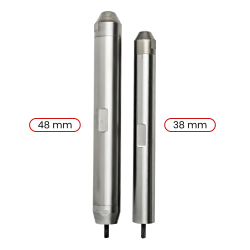
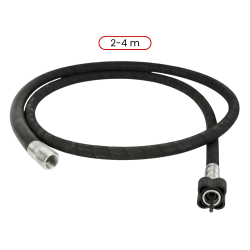
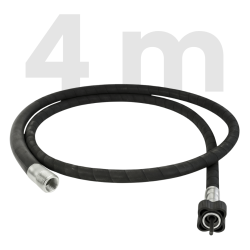
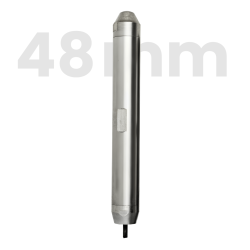
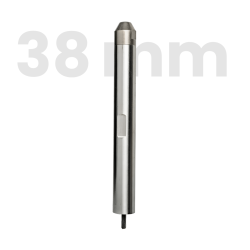
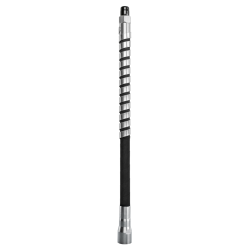
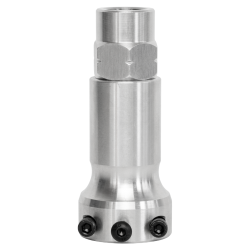
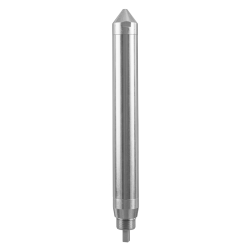
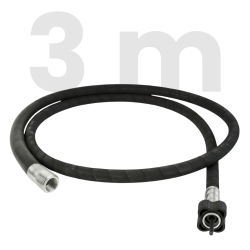
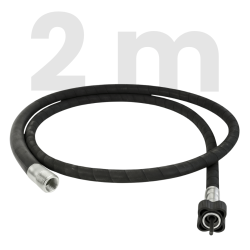
That is why the wear parts are a category rather than an afterthought. Available here: XP poker heads in 38 and 48 mm, XT-E flexible shafts of 2, 3 and 4 m, shaft-and-poker sets, and for the petrol unit a 0.5 m hose, a 45 mm poker and a shaft coupling.
Fit is decided by the 7 mm square socket at the shaft end. It is a standard used by drives from several manufacturers, so replacing a worn shaft does not mean replacing the machine.
Drives and complete sets are in concrete vibrators, along with how to size the poker to the element and how to run the compaction.
The motor in the drive runs inside a dry housing and never touches concrete — with shielded carbon brushes it usually outlives several sets of tooling. That is why a drive is bought once and shafts and pokers as required.
A flexible shaft is a wound cable in a sheath, with a drive socket at one end and a poker at the other. At every insertion it transmits tens of thousands of revolutions a minute through whatever curve it happens to form — the tighter the curve, the higher the stress in the cable and the sooner it stretches. The protective hose keeps grease in and dust out; a chafed hose is usually the beginning of the end for the shaft.
A poker head works inside the mix: an eccentric weight spins on bearings inside while the steel tube abrades against aggregate outside. Both wear at once — the bearings from load, the surface from abrasion — except that the first shows up in the vibration and the second in the diameter.
| Part | System | Size | Coupling |
|---|---|---|---|
| XP poker 38 mm | STORM 2300 / XT-E | ⌀ 38 mm | XT-E shaft |
| XP poker 48 mm | STORM 2300 / XT-E | ⌀ 48 mm | XT-E shaft |
| XT-E flexible shaft | STORM 2300 | 2 / 3 / 4 m | 7 mm square socket |
| XT-E shaft with XP poker | STORM 2300 | 2 / 3 / 4 m · ⌀ 38 or 48 mm | 7 mm square socket |
| Power-Bar shaft with hose | Power-Bar | 0.5 m | Power-Bar only |
| Power-Bar poker 45 mm | Power-Bar | ⌀ 45 mm | Power-Bar only |
| TA-BN3282 shaft coupling | Power-Bar | — | Power-Bar only |
The split is hard and worth knowing before ordering: XT-E / XP tooling belongs to the electric STORM 2300 system, while the Power-Bar hose, poker and coupling belong to the petrol unit. The two are not interchangeable, even though they do the same job.
XT-E shafts terminate in a 7 mm female square socket. That is not proprietary to one range — drives from several manufacturers use the same coupling, and that is exactly why the shaft is a replaceable part rather than something tied to one machine.
In practice it means that when a shaft is worn you replace the shaft, not the set. On the STORM 2300 the shaft goes on and off without tools, so a change on site is a matter of a minute rather than a trip to a service centre.
The reverse holds too: if a drive does not have that socket, an XT-E shaft will not fit it however similar it looks. Check the shape and size of the socket before ordering, not the brand.
Usually the eccentric bearings. The head still turns, but amplitude drops and the radius of action drops with it — concrete around the insertion stops being compacted to the full distance. It is an insidious fault, because nothing shows from outside and the result appears only after striking the formwork, as honeycombing and voids near the face.
A stretched cable runs with more internal friction and turns part of the power into heat instead of passing it to the poker. If the shaft is hot along its whole length and the poker beats visibly slower than it used to, replacing the shaft usually restores the original performance — without touching the drive.
The hose is not decoration: it keeps grease in and dust out. Once it is worn through, cement slurry reaches the cable and acts as grinding paste, so the shaft then wears out in days rather than months. Chafing usually appears at the poker neck and at the coupling, because that is where the shaft bends most tightly.
The steel tube abrades against aggregate and loses diameter over time. A thinner poker means less eccentric mass at the circumference, so weaker vibration, and with heavy wear a risk of the casing being worn through and slurry reaching the inside. That is the point at which a poker is replaced rather than refurbished.
Concrete left to set on a poker or a hose can then only be removed mechanically, and that ruins the tube surface and the shaft sheath. Tooling is washed straight after the pour, before the slurry sets — the same rule as with trowel blades and pans, with the same consequence: cleaned within the hour it costs a minute, cleaned the next day it costs its own replacement.
Do not store a shaft coiled tight. The cable remembers the shape it was left in and runs with a preload it never had when new. A loose, large-radius coil or a hook on the wall is the whole difference.
They are the same part described from two sides. Inside is a wound cable that carries rotation from the drive to the poker; outside is a protective hose that keeps grease in and dust out. On site people say "vibrator hose", catalogues say "flexible shaft". This range covers XT-E shafts of 2, 3 and 4 m with a 7 mm square socket for the STORM 2300 drive, plus a 0.5 m hose for the petrol Power-Bar unit.
Three, at different rates. The poker head first — it works in the mix, abrades against aggregate and carries the eccentric bearings inside. Then the flexible shaft, whose cable stretches from working in torsion and whose hose chafes at the poker neck and at the coupling. The drive lasts longest because it never touches concrete; its consumable is the set of carbon brushes. Hence: buy the drive once, shafts and pokers as needed.
The poker attaches to the shaft, and it is the shaft that determines the fit to a drive. XT-E shafts end in a 7 mm female square socket — a standard used by drives from several manufacturers, including the STORM 2300. If your drive has that socket, an XT-E shaft with an XP poker will work; if it has anything else, no adapter will help. Check the shape and size of the socket in the drive before ordering, not the badge on the housing.
Yes, and that is the point of separating these parts — XT-E shafts take XP pokers in both diameters. The swap has consequences: a larger head increases the radius of action and the vibration energy, but also the resistance the cable has to carry, so on the longest shafts the load rises. In practice that means fitting the 48 mm head for mass elements rather than leaving it on permanently, since in congested reinforcement it will not reach the bottom anyway.
By three symptoms at once: the shaft is hot along its length, the poker beats noticeably slower than before, and the drive is not slowing down. A stretched cable runs with more internal friction and converts part of the power into heat instead of passing it to the eccentric. A separate warning sign is a chafed protective hose — once that fails, cement slurry reaches the cable and works as grinding paste, and the shaft is finished in days rather than months.
Most often because the eccentric bearings are worn. The weight still spins, but the amplitude falls and the radius of effective compaction falls with it — concrete around the insertion is no longer being compacted to the full distance. It is a dangerous fault because nothing shows from outside; the result appears when the formwork comes off, as honeycombing, voids and gravel pockets near the face. A poker in that state is replaced, not refurbished.
No. These are two separate systems: XT-E shafts and XP pokers belong to the electric STORM 2300, while the 0.5 m hose, 45 mm poker and shaft coupling belong to the petrol Power-Bar. They differ both in how they mount and in how the drive is transmitted, so this is not an adapter question. When ordering spares, quote the system name rather than just the poker diameter.
Wash them as soon as the pour is finished, before the slurry sets — hardened concrete can then only be removed mechanically, and that damages the poker tube and the shaft sheath. Do not coil a shaft tightly: the cable remembers the shape it was left in and runs with a preload it never had when new. A loose, large-radius coil, or hanging the shaft vertically, extends its life more than any servicing.
Electric drives, complete sets and the petrol unit are in concrete vibrators, together with sizing the poker to the element and how to run the compaction. Slabs compacted from above are covered by vibratory screeds, and the surface is closed afterwards by power trowels.
Essential cookies keep your cart and login working — the shop will not run without them. The rest let us measure traffic and target our ads, and we switch them on only with your consent. You can change your choice at any time using the “Cookie settings” link in the footer. Cookie policy
Essential
Cart, login, form security and remembering this choice. The shop will not work without them, so they need no consent.
Toolsa
Analytics
We count page views and checkout paths to find what is broken in the shop. We look at the data in aggregate.
Google Analytics · Microsoft Clarity
Marketing
We show our ads outside the shop and check which of them lead to a purchase. Phone callback requests land here too.
Google Ads · OptinMonster · Zadarma