
Slurry vacuum for concrete: how to choose the right wet vac
Wet drilling, grinding and sawing all end the same way: a floor covered in cement slurry that a regular vacuum cannot survive. Three numbers — airflow, water lift and tank size — decide which machine can.

What is concrete slurry — and why it kills a regular vacuum?
Concrete slurry is the mix of water and cement fines produced by wet core drilling, wet grinding and floor sawing. It is abrasive, strongly alkaline (pH 12–13) and sets hard once it settles. A slurry vacuum pairs a 90 l tank with high suction — up to 3,000 mm H₂O — and filtration designed to keep wet fines out of the motor.
A standard wet & dry vacuum fails at exactly this point: cement fines blind the filter within minutes, suction collapses, and whatever passes the filter grinds through the motor. Machines built for slurry, like the units in our wet and slurry vacuum cleaners range, separate the heavy fraction in the tank before air reaches the filter stage.
Where does the slurry come from on site?
The three usual sources are wet core drilling, wet grinding and floor sawing. A handheld rig such as the Toolsa DDB 26 drills up to 160 mm cores in concrete with constant water feed, and every millimetre of that cut returns as slurry that has to go somewhere — usually through a Ø 40 mm hose into the vacuum tank.
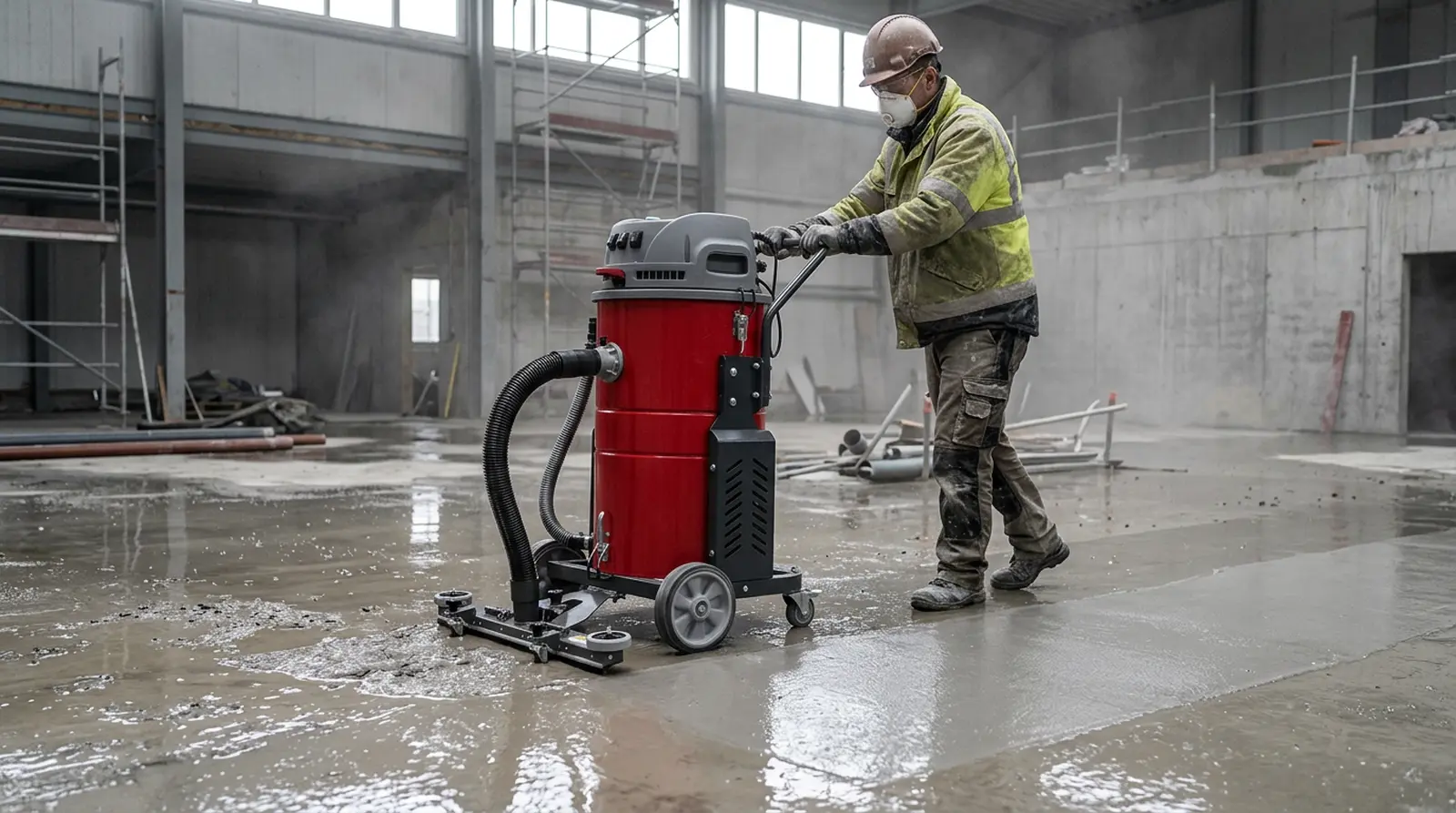
If you run handheld core drills or floor saws with water suppression, a slurry vacuum is the third machine of the set — it keeps the slab clean enough to keep cutting and stops the slurry from setting where it landed.
The three numbers that matter: airflow, water lift, tank
Compare slurry vacuums on three parameters: airflow (430–620 m³/h in the Toolsa range), water lift (200 mbar ≈ 2,040 mm H₂O; 3,000 mm H₂O ≈ 294 mbar) and tank capacity (90 l). Airflow moves volume across the floor; water lift pulls dense, wet material up the hose; the tank decides how often you stop.
The two are not interchangeable. High airflow with weak lift skims water but leaves the heavy fraction; high lift with low airflow clears a drill collar well but sweeps a floor slowly. Manufacturers quote one or the other, so convert before comparing: 1 mbar ≈ 10.2 mm H₂O, and 120 l/s equals 432 m³/h.
Toolsa WD3000 vs TWC-3/90 — which one?
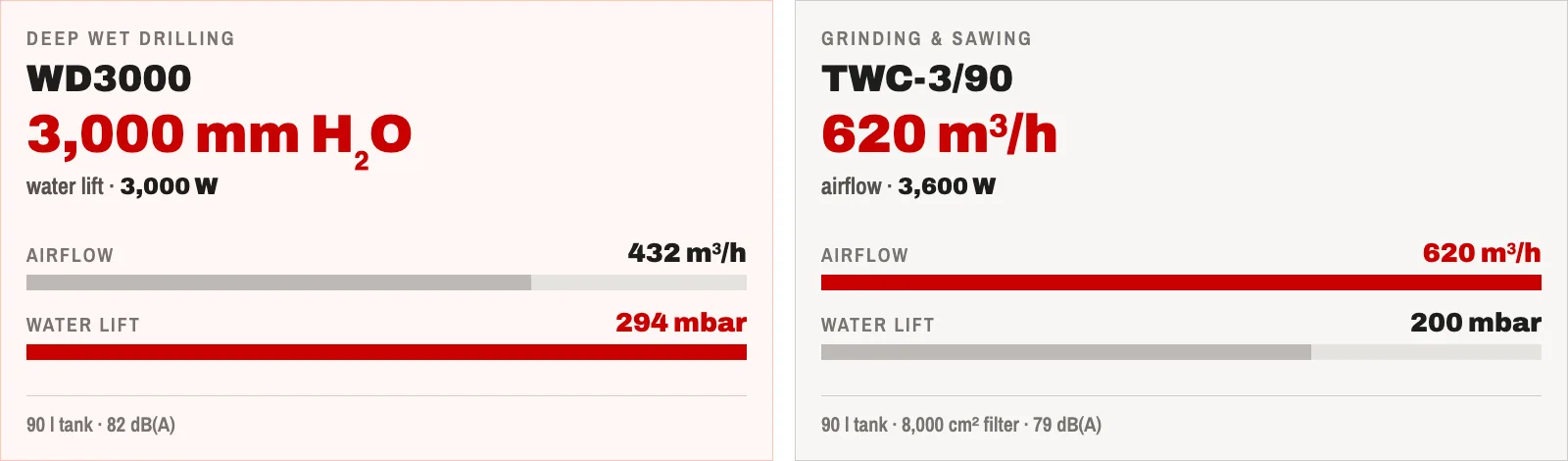
The WD3000 leads on water lift (3,000 mm H₂O) and the TWC-3/90 on airflow (620 m³/h) and filter area (8,000 cm²). Both carry 90 l tanks and run on 230 V. Pick by the job: deep wet drilling favours lift, continuous grinding favours airflow.
| Parameter | WD3000 | TWC-3/90 |
|---|---|---|
| Power | 3,000 W | 3,600 W |
| Airflow | 120 l/s (432 m³/h) | 620 m³/h |
| Water lift / vacuum | 3,000 mm H₂O (≈ 294 mbar) | 200 mbar (≈ 2,040 mm H₂O) |
| Tank | 90 l | 90 l |
| Filter area | – | 8,000 cm² |
| Noise | 82 dB(A) | 79 dB(A) |
| Size | Ø 440 × 950 mm | 600 × 650 × 980 mm |
| Weight | – | 32 kg |
| Supply | 230 V, 50 Hz | 230 V, 50 Hz |
One practical note for UK sites: both machines are 230 V, 50 Hz units — they will not run from a 110 V site transformer, so plan a 230 V supply or a generator.
Emptying and disposal — do not pour slurry down the drain
Concrete slurry must never go into drains or watercourses: at pH 12–13 it is corrosive to aquatic life, and the fines set hard inside pipework. A full tank is also heavy — the TWC-3/90 weighs 32 kg before you add 90 l of slurry — so empty little and often. The routine:
- Switch the vacuum off and move the tank to a bunded or contained spot.
- Let the slurry settle — the solids drop out of suspension.
- Decant or pump off the clearer water for reuse in cutting, where possible.
- Leave the solids to dry, then dispose of them as inert construction waste.
- Rinse the tank and filter before the residue sets.
Rules on discharge vary between water authorities — when in doubt, ask yours before disposing of anything off-site.
Slurry vacuums in the Toolsa range
We build both machines around the same duty: 90 l tanks, 230 V supply and hose connections sized for concrete work (Ø 40 mm on the WD3000). As the manufacturer we match them to our own drilling and sawing machines, so the set works as a system — browse the full wet and slurry vacuum range or the wider industrial vacuum cleaners catalogue.
Frequently asked questions
- What is a slurry vacuum?
- A slurry vacuum is an industrial wet vacuum designed to pick up the mix of water and cement fines produced by wet core drilling, grinding and floor sawing. Unlike a household wet & dry unit, it separates the heavy wet fraction in a large tank — 90 l in the Toolsa range — before air reaches the filter, so cement fines do not blind the filter or reach the motor.
- Can I use a normal wet & dry vacuum for concrete slurry?
- Not for more than a few minutes. Cement fines blind a standard filter almost immediately, suction collapses, and abrasive particles that pass through wear out the motor. Slurry-rated machines run larger filtration — 8,000 cm² of filter area in the TWC-3/90 — and tanks shaped to let solids settle away from the airflow.
- How do I dispose of concrete slurry in the UK?
- Never into drains or watercourses — slurry is strongly alkaline (pH 12–13) and the fines set inside pipework. Let the tank contents settle, decant the clearer water for reuse in cutting, dry the solids and dispose of them as inert construction waste. Discharge rules differ between water authorities, so confirm locally before disposing of anything off-site.
- What size slurry vacuum do I need?
- For a single drill or grinder, a 90 l tank with 430–620 m³/h of airflow covers a full working day of stop-and-empty cycles. The deciding factor is the duty: deep wet drilling needs water lift (3,000 mm H₂O in the WD3000), while continuous grinding needs airflow and filter area (620 m³/h and 8,000 cm² in the TWC-3/90).
- What is the difference between water lift and airflow?
- Water lift (quoted in mm H₂O or mbar) is the vacuum's ability to pull dense, wet material up the hose; airflow (m³/h or l/s) is the volume of air it moves. Converting helps comparison: 1 mbar equals roughly 10.2 mm H₂O, and 120 l/s equals 432 m³/h. A slurry vacuum needs both, but deep drilling leans on lift and floor work leans on airflow.
- Which Toolsa slurry vacuum is best for core drilling?
- The WD3000: its 3,000 mm H₂O of water lift pulls dense slurry from around the drill collar, and the Ø 40 mm hose connection matches water-collection attachments. For grinding and long sawing runs the TWC-3/90 is the better fit, with 620 m³/h of airflow and 8,000 cm² of filter area.
- How loud is a slurry vacuum?
- The Toolsa units run at 79 dB(A) (TWC-3/90) and 82 dB(A) (WD3000). Under the Control of Noise at Work Regulations 2005, 80 dB(A) is the lower exposure action value at which employers must provide hearing protection and information — in practice, plan ear protection for vacuum-plus-grinder work.
- Will a slurry vacuum run on 110 V site power?
- The Toolsa slurry vacuums are 230 V, 50 Hz machines drawing 3,000–3,600 W, so they will not run from a 110 V site transformer. On UK sites plan a 230 V supply, a suitable generator, or check the distribution board before the machines arrive.
Equipment featured in this article
-
 Toolsa Beton Troweling Disc (disk) 1170 Mm/ 3 Mm
-
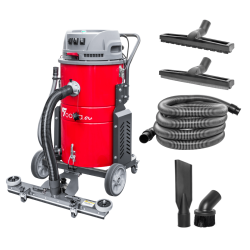 Toolsa TWC-3 90 Wet/dry Sludge Vacuum Cleaner
-
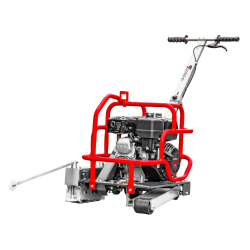 Toolsa TAS 150 Green Concrete Floor Saw (Honda GX 160)
-
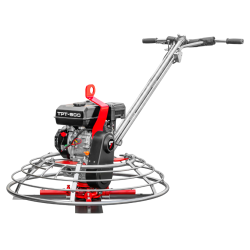 Toolsa TPT-900R7 Petrol Power Trowel (Rato R210, 7 HP)
-
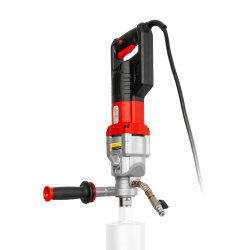 Toolsa DDB 26 Professional Handheld Core Drill, Brushless (2600 W)
-
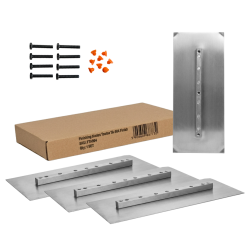 Toolsa Finish FTA-904 Concrete Trowel Blades (Set Of 4)
-
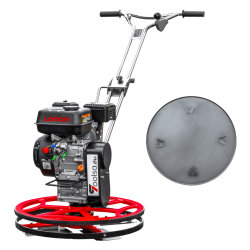 Toolsa TPT-600 Petrol Edge Power Trowel
-
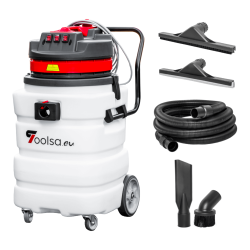 Toolsa WD3000 Wet/dry Sludge Vacuum Cleaner
-
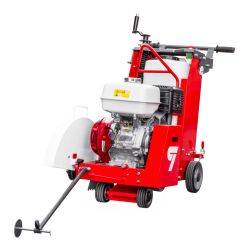 Toolsa TFS 500 Concrete And Asphalt Floor Saw (Honda GX 390)
- Toolsa DD 18 Professional Hand-Held Core Drill (1800 W)
-
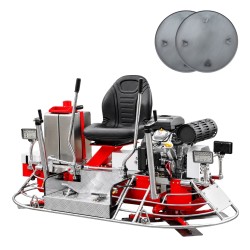 Toolsa TPT-836 Low Rider Ride-On Power Trowel (Rato R740 | 25 HP)
-
 Toolsa DDB 26P (2600 W) Professional Hand-Held Core Drill With Micro-Impact.
-
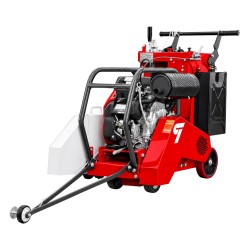 Toolsa TFS 600 Drive Concrete And Asphalt Floor Saw (Honda GX 690)
-
Toolsa DDB 26 Professional Handheld Core Drill, Brushless (2600 W)
-
Toolsa TPT-900R7 Petrol Power Trowel (Rato R210, 7 HP)