
Handheld core drill: how to choose the rig and the diamond bit
Handheld coring stops at 80 mm, stands take you to 200 mm, and gear choice decides whether your diamond bit cuts or glazes. Here is how the numbers fit together — from a manufacturer of the machines.
What can a handheld core drill actually do?
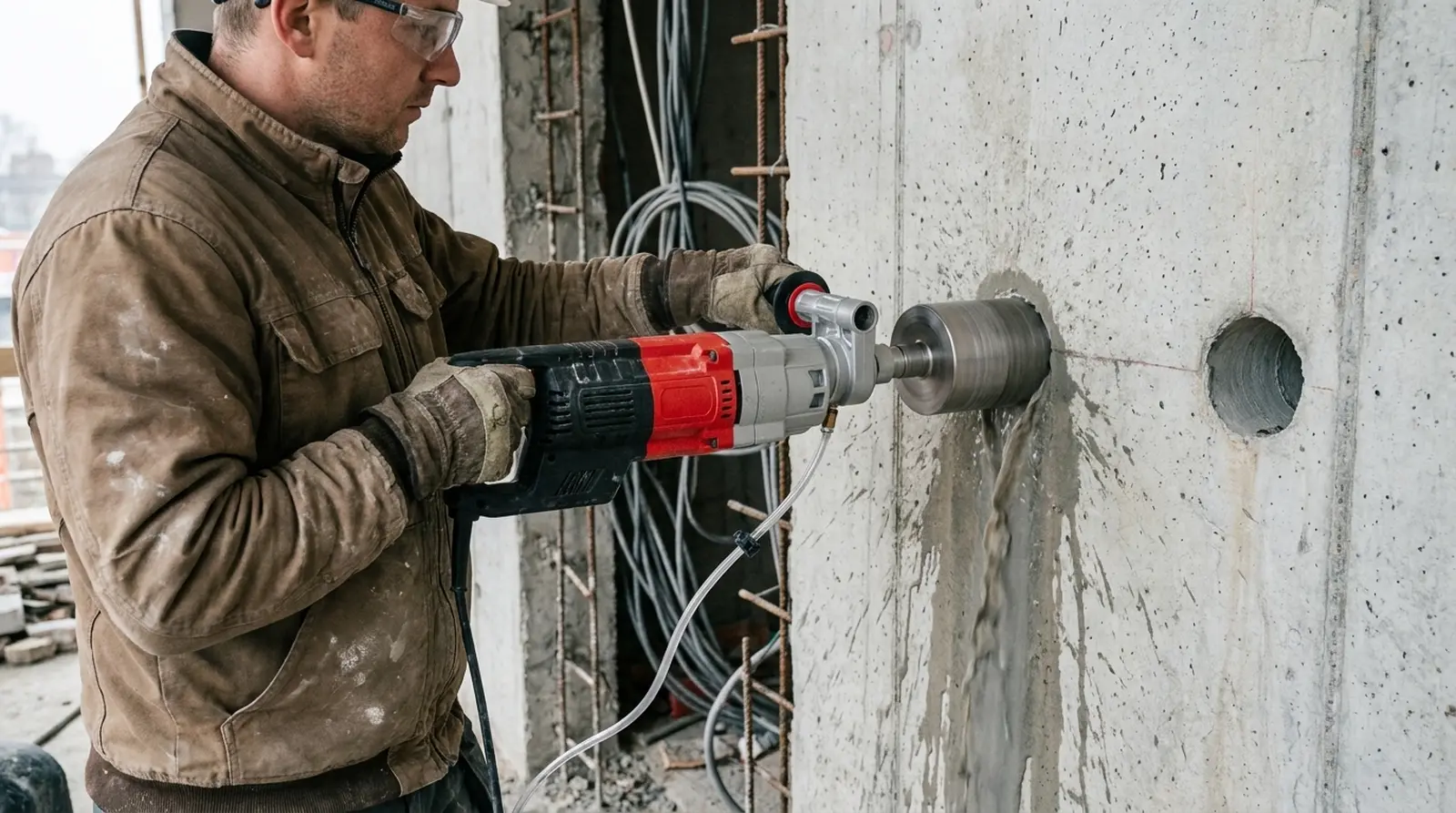
Held in hand, a core drill runs diamond bits up to 80 mm in diameter; mounted on a stand, the same motor drills up to 200 mm. The Toolsa range spans 1,800–2,600 W, and every model drills reinforced concrete up to 160 mm with the right gear and bit.
That 80 mm handheld limit is not about power — it is about torque reaction. When a bit jams, the machine tries to spin you instead of the bit, and above 80 mm no operator can hold it safely. The full line-up is in our handheld core drills category; larger rigs live with the complete core drilling machines.
Gears and rpm: match the speed to the bit diameter
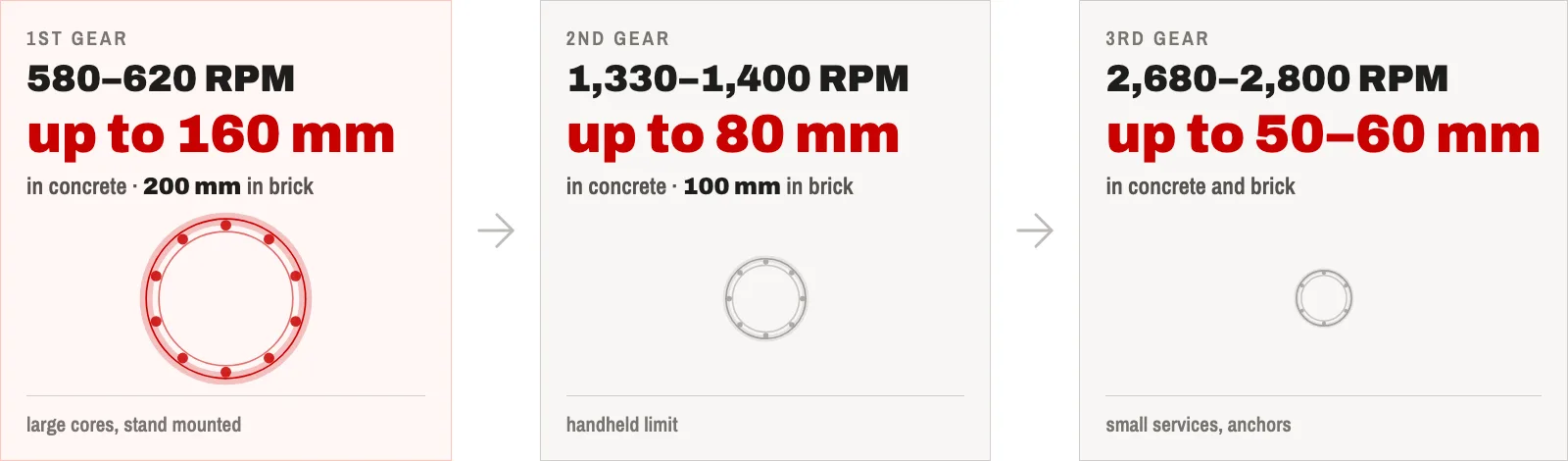
Diamond bits cut at their best within a speed window: the bigger the diameter, the slower the spindle. That is why the DD 18 and DDB 26 carry 3-speed gearboxes (580–2,800 rpm and 620–2,680 rpm) — first gear drives bits up to 160 mm in concrete, second up to 80 mm, third up to 50–60 mm.
| Parameter | DD 18 | DDB 26 | DDB 26P | DB 16 |
|---|---|---|---|---|
| Power | 1,800 W | 2,600 W (brushless) | 2,600 W | 1,800 W |
| Gears | 3 (580 / 1,400 / 2,800 rpm) | 3 (620 / 1,330 / 2,680 rpm) | 1 (840 rpm) | 2 (1,080 / 2,160 rpm) |
| Concrete, per gear | 160 / 80 / 60 mm | 160 / 80 / 50 mm | up to 160 mm | up to 160 mm |
| Brick, per gear | 200 / 100 / 60 mm | 200 / 100 / 60 mm | up to 180 mm | – |
| Extras | – | brushless motor | mechanical micro-impact, vacuum port 36/48 mm | percussion |
| Supply | 110 / 230 V | 110 / 230 V | 110 / 230 V | 230 V |
| Weight | 8 kg | 7.1 kg | 7.1 kg | 6.2 kg |
Rule of thumb from the table: a 100 mm bit in concrete belongs in first gear, a 50 mm bit in third. Running a big bit too fast glazes the diamond segments — the bit stops cutting and starts polishing.
110 V or 230 V — what runs from a UK site transformer?
Three of the four Toolsa rigs — DD 18, DDB 26 and DDB 26P — are dual-voltage 110/230 V machines, so they run straight from a 110 V site transformer as well as a 230 V wall socket, with rated current between 9 and 12 A depending on the model.
The DB 16 is a 230 V unit — a fit for workshops and domestic installs rather than transformer-fed sites. If your work is mostly commercial sites, dual voltage is the spec to insist on.
Wet, dry or micro-impact?
Wet drilling is the default in concrete: every model takes a G 1/4" water feed that cools the bit and clears the cut. Dry drilling suits brick and situations where water is unwelcome — the 7.1 kg DDB 26P pairs a 36/48 mm vacuum port with mechanical micro-impact, which chips the material ahead of the segments instead of relying on pressure alone.
Wet drilling produces slurry, and slurry needs somewhere to go — on tidy jobs that means a wet vacuum from the wet and slurry vacuum cleaners range rather than a mop. For hard aggregate and heavily reinforced sections, micro-impact keeps penetration rates up where a plain rotary bit slows down.
When you need a stand
Above 80 mm the drill goes on a stand: the DD 18, DDB 26 and DDB 26P all mount the Toolsa DS 250 and then drill up to 200 mm in brick and 160 mm in concrete. A stand also keeps the hole square — at 200 mm depth, a 1° lean puts the exit 3–4 mm off target.
Spindle fit is standard across the range: 1 1/4" UNC external thread plus a G 1/2" internal, so bits and core drill stands interchange between models. Diamond bits themselves — 100 mm and 150 mm are the workhorses in the UK — are in the diamond core drill bits category.
The Toolsa handheld range at a glance
Four machines cover the span from 6.2 kg installer's drills to 2,600 W brushless units: DD 18 (three gears, 110/230 V), DDB 26 (brushless, three gears), DDB 26P (micro-impact, dry-ready) and DB 16 (percussion, 230 V). As the manufacturer we match the same spindle standard across all of them — browse the handheld core drills range for full specifications.
Frequently asked questions
- What size hole can you drill with a handheld core drill?
- Up to 80 mm in diameter when the machine is held in hand — the limit is torque reaction, not power. Mounted on a stand such as the Toolsa DS 250, the same motors drill up to 200 mm in brick and 160 mm in reinforced concrete, using first gear and a steady water feed.
- Do I need water for core drilling?
- In concrete, yes — a G 1/4" water feed cools the diamond segments and flushes the cut, and every Toolsa rig has the connection built in. Dry drilling works in brick and blockwork: the DDB 26P is built for it, with a 36/48 mm vacuum port for dust extraction and mechanical micro-impact to keep the bit biting.
- What is micro-impact on a core drill?
- A mechanical action that adds thousands of tiny axial taps to the bit's rotation. In hard aggregate or heavily reinforced concrete it chips material ahead of the diamond segments, so the 2,600 W DDB 26P holds its penetration rate where a plain rotary machine slows down. Unlike hammer drilling, it is gentle enough for diamond bits.
- Will a core drill run from a 110 V site transformer?
- The Toolsa DD 18, DDB 26 and DDB 26P are dual-voltage 110/230 V machines drawing 9–12 A, so they run from a standard UK site transformer as well as a 230 V socket. The DB 16 is 230 V only — plan it for workshop and domestic work rather than transformer-fed sites.
- Which gear for a 100 mm core bit?
- First gear. The gearbox ranges map straight to bit diameter: on the DD 18 and DDB 26, first gear covers bits up to 160 mm in concrete, second up to 80 mm and third up to 50–60 mm. Spinning a 100 mm bit in a higher gear overheats and glazes the segments, and the bit stops cutting.
- What thread do Toolsa core drills use?
- The industry-standard pair: 1 1/4" UNC external thread plus a G 1/2" internal — the same fit across all four machines. Bits from 100 mm and 150 mm workhorse sizes upwards screw straight on, and adapters cover smaller tile and installer bits.
- How heavy is a handheld core drill?
- The Toolsa range runs from 6.2 kg (DB 16) through 7.1 kg (DDB 26 and DDB 26P) to 8 kg (DD 18). Weight matters at the 80 mm handheld limit: a jammed bit converts motor torque into a twist on your wrists, so lighter brushless machines with 2,600 W on tap are easier to control overhead.
- When is a drill stand worth it?
- Whenever the hole is over 80 mm, deeper than about 300 mm, or has to be square — at 200 mm depth a 1° lean moves the exit point 3–4 mm. A stand also lets one operator run repetitive holes all day; the DD 18, DDB 26 and DDB 26P all mount the Toolsa DS 250.
Equipment featured in this article
-
 Toolsa Beton Troweling Disc (disk) 1170 Mm/ 3 Mm
-
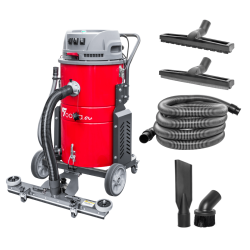 Toolsa TWC-3 90 Wet/dry Sludge Vacuum Cleaner
-
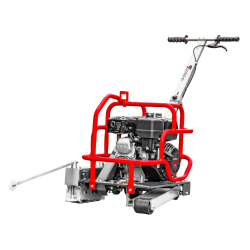 Toolsa TAS 150 Green Concrete Floor Saw (Honda GX 160)
-
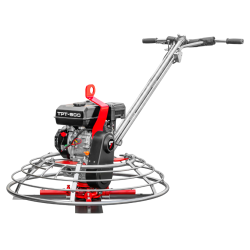 Toolsa TPT-900R7 Petrol Power Trowel (Rato R210, 7 HP)
-
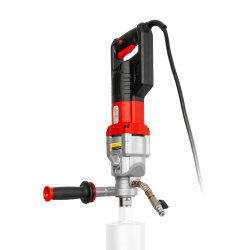 Toolsa DDB 26 Professional Handheld Core Drill, Brushless (2600 W)
-
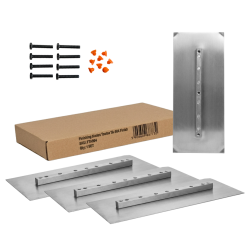 Toolsa Finish FTA-904 Concrete Trowel Blades (Set Of 4)
-
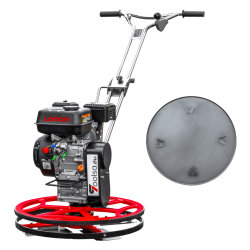 Toolsa TPT-600 Petrol Edge Power Trowel
-
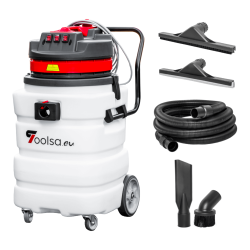 Toolsa WD3000 Wet/dry Sludge Vacuum Cleaner
-
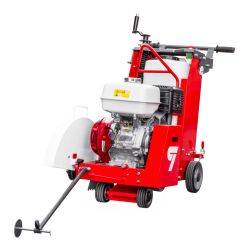 Toolsa TFS 500 Concrete And Asphalt Floor Saw (Honda GX 390)
- Toolsa DD 18 Professional Hand-Held Core Drill (1800 W)
-
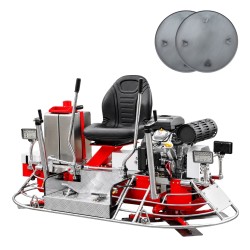 Toolsa TPT-836 Low Rider Ride-On Power Trowel (Rato R740 | 25 HP)
-
 Toolsa DDB 26P (2600 W) Professional Hand-Held Core Drill With Micro-Impact.
-
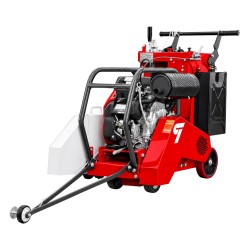 Toolsa TFS 600 Drive Concrete And Asphalt Floor Saw (Honda GX 690)
-
Toolsa DDB 26 Professional Handheld Core Drill, Brushless (2600 W)
-
Toolsa TPT-900R7 Petrol Power Trowel (Rato R210, 7 HP)