
TAD970
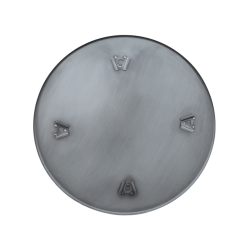
Toolsa Power Trowel Float Pan, 970 x 3 Mm
- 970 mm
- 3 mm
zł367.77 299,00 zł net At your place on Monday
A power trowel works with two entirely different tools mounted on the same spider. A float pan is a full pressed steel disc that spreads the machine's weight over its whole area and goes on while the concrete is still soft. Trowel blades work on narrow edges, so contact pressure is many times higher, and they go on only once the surface has set enough not to be scored.
1 product
Toolsa float pans come in 610, 945, 970 and 1170 mm at 3 mm thick, each diameter matched to a specific machine. Finish blades are supplied in sets of 4 for 600 and 900 mm rotors.
All of it is interchangeable between makes: fit is decided by rotor diameter and mounting hole spacing, not by the badge on the machine. Blades are always replaced as a full set — one worn blade changes the pressure across its whole arm, and the slab shows it.
The machines this tooling goes on are in walk-behind power trowels and ride-on power trowels.
A float pan contacts the concrete across its whole face, so the weight of the machine is spread over thousands of square centimetres. Contact pressure is low and the tool behaves like a huge rotating float: it levels the micro-profile, closes the pores and brings cement paste to the surface, which is what the later passes work with. There are no edges to score, because there are none.
A blade contacts the concrete along a strip a few centimetres wide, set at an angle. The same machine weight now acts on an area dozens of times smaller, and instead of levelling it compacts. This is the stage that produces surface hardness and sheen — and the stage that cannot be brought forward, because on soft concrete the blades leave grooves that no later pass will close.
So the order is always the same and it is not a matter of preference. Pan first, blades second, and their pitch rises with every subsequent pass. Tooling is not an accessory to the machine — it determines which stage the machine is able to work at.
| Float pan | Thickness | For machine | Machine blade circle |
|---|---|---|---|
| 610 mm | 3 mm | TPT-600 (edging) | 600 mm |
| 945 mm | 3 mm | TPT-900, TPT-900R10 | 940 mm |
| 970 mm | 3 mm | TPT-836 EHG, TPT-836 Low Rider | 2 × 900 mm |
| 1170 mm | 3 mm | TPT-1046 EHG | 2 × 1200 mm |
A pan is larger than the circle swept by the blades because it has to overhang them — otherwise the blade edges would work outside the disc and you would be back to the problem the pan was there to solve. Twin-rotor machines need two pans, one per rotor; on Toolsa ride-on power trowels both are supplied as standard.
A pan is attacked in two ways at once: abraded from below by the aggregate and bent from above by the weight of the machine. 3 mm is the compromise between the two — thinner steel ripples under load and transfers its own unevenness to the slab, thicker steel adds weight that somebody has to lift at every change.
The second variable is how the disc is formed. Toolsa pans are pressed, not folded. Pressing shapes the whole face in one operation, so the geometry is identical all the way round and returns after load; folding shapes the rim in sections and leaves stresses that let the steel distort over time.
The material is abrasion-resistant steel. That is what decides how many slabs a pan survives — particularly with a dry-shake hardener, where quartz or corundum aggregate wears tooling several times faster than plain concrete does.
Blades split into two types by the stage they serve. Finish blades are double-sided and work the last passes, once the surface has set — they are responsible for the smoothness and sheen of the wearing layer. Combination blades are single-sided, with a more pronounced leading edge, and go on earlier, between the pan pass and the finish.
Toolsa supplies Finish sets of 4: TA-600/4 for machines with a 600 mm rotor and TA-900/4 for machines with a 900 mm rotor. Four is one rotor's worth — exactly what a walk-behind power trowel carries. A twin-rotor machine runs eight blades, so it takes two sets.
Fit is decided by rotor diameter and mounting hole spacing, not by the make of the machine. Blades for 600 and 900 mm rotors go on any trowel of that size, whoever built it — that is an industry standard, not a feature of one range.
A pan is not something you size to the floor — it belongs to a specific machine. 610 mm for the TPT-600, 945 mm for the TPT-900 and TPT-900R10, 970 mm for the TPT-836, 1170 mm for the TPT-1046. On another manufacturer's machine the only figure you need is its blade circle.
On blades it is the working edge that goes: once it stops being straight, or its thickness has visibly dropped, pressure no longer spreads evenly and the slab shows streaks. On a pan, abrasion is rarely the problem — distortion is. A disc that has stopped being flat prints its own curvature into fresh concrete on every revolution, and no later pass will take that out.
The four blades on a rotor must share the same thickness and the same edge profile. One new blade among three worn ones rides lower than the rest and scores the surface; one worn blade among three new ones stops closing the concrete. That is why sets are sold in fours and replaced complete.
Concrete left to harden on tooling can then only be removed mechanically, which ruins the working face and changes the edge geometry. Pans and blades are washed straight after the pass and stored flat — a pan resting on three points distorts under its own weight and is scrap by the next season, without having finished a single extra slab.
A float pan is a full pressed steel disc, 3 mm thick, fitted over the blade spider for the first stage of finishing. It spreads the machine's weight across its entire face, so contact pressure is low and the tool levels the micro-profile, closes the pores and brings cement paste to the surface instead of scoring the concrete with edges. It goes on while the slab is still soft, at a point blades could not survive. Diameters offered here are 610, 945, 970 and 1170 mm, each matched to a specific machine.
Yes, all three name the same tool and all three are in everyday use on site. UK crews most often say power float pan, because the machine itself is a power float; catalogues tend to list float pan or trowel pan, and "disc" appears in some translated specifications. Whatever the wording, it means the full steel disc fitted to the rotor for the first pass — as opposed to trowel blades, the narrow steels used for the finishing stage.
For a machine with a 940 mm blade circle — the TPT-900 and TPT-900R10 — the correct pan is 945 mm. The rule is general: the pan has to be slightly larger than the circle the blades sweep so that it overhangs them. A 600 mm edging trowel takes the 610 mm pan, the TPT-836 ride-on takes 970 mm and the TPT-1046 takes 1170 mm. For another make, all you need is its blade circle from the specification sheet.
Yes. Fit is decided by rotor diameter and mounting hole spacing, not by the manufacturer of the machine — this is an industry standard rather than a proprietary arrangement. Blade sets for 600 and 900 mm rotors therefore go on any trowel of that size, and the same holds for 610, 945, 970 and 1170 mm pans. The one figure to check before ordering is the machine's blade circle, given in its technical data.
The stage they serve and how they are built. Finish blades are double-sided and work the final passes, once the surface has set — they produce the smoothness and sheen of the wearing layer. Combination blades are single-sided with a more pronounced leading edge and go on earlier, between the pan pass and the finish. Toolsa supplies finish sets of 4: TA-600/4 for 600 mm machines and TA-900/4 for 900 mm machines.
A set is 4 blades, which is one rotor's worth — what walk-behind and edging trowels carry. A twin-rotor machine runs eight blades and therefore takes two sets. Replacement always covers a whole rotor: blades must share thickness and edge profile, because a new blade among worn ones rides lower and scores the surface, while a worn blade among new ones stops closing the concrete. Mixed wear shows on the finished slab as streaking.
Flatness decides, not thickness. A 3 mm pan abrades slowly but distorts under load and in careless storage — and a disc that is no longer flat prints its curvature into fresh concrete on every revolution, which no further pass will remove. Check it by laying the pan on a flat surface and looking for daylight underneath. The second sign is a worn outer rim, after which the disc starts to catch instead of sliding over the surface.
Wash the paste off as soon as the pass is finished, before it sets — hardened concrete can only be removed mechanically, and that damages the working face and alters the leading edge. After washing, store the tooling flat, supported across its whole face: a pan left resting on three points distorts under its own weight and becomes scrap within a season without having finished one extra slab. With dry-shake hardeners, washing matters even more, because quartz left on the steel keeps abrading it after work.
The machines this tooling fits are in walk-behind power trowels and ride-on power trowels. When to get on the slab and how to run consecutive passes is covered by the parent category, power trowels. Edges and the places no machine reaches are finished with concrete hand tools.
Essential cookies keep your cart and login working — the shop will not run without them. The rest let us measure traffic and target our ads, and we switch them on only with your consent. You can change your choice at any time using the “Cookie settings” link in the footer. Cookie policy
Essential
Cart, login, form security and remembering this choice. The shop will not work without them, so they need no consent.
Toolsa
Analytics
We count page views and checkout paths to find what is broken in the shop. We look at the data in aggregate.
Google Analytics · Microsoft Clarity
Marketing
We show our ads outside the shop and check which of them lead to a purchase. Phone callback requests land here too.
Google Ads · OptinMonster · Zadarma