
Lightest TA-HLS50
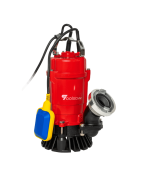
Toolsa TA-HLS50 Trash Water Pump (Honda GX 160)
- 41 kg
- Honda GX 160
- 610 x 485 x 480 mm
zł4,182.00 3 400,00 zł net At your place on Monday
A construction pump is chosen for the liquid, not for the size of the job. Rainwater, water carrying sand, slurry with stones and sewage are four different tasks — and four different builds, none of which a single "more powerful" machine can replace.
5 products
Pick a type, and more filters will show up.
Hence the split. Clean water pumps lift clean water to 60 m. Submersible pumps dewater excavations of contaminated water and draw down to 2 mm. Trash pumps with Honda engines move slurry and large volumes with no mains supply. Sewage is handled by submersibles with an agitator.
The second criterion is supply: 230 V from a socket, 400 V from a distribution board, or a petrol engine where there is no power at all. On an excavation that answer settles the matter before any hydraulic figure does.
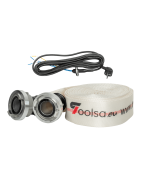
Fire hoses and fittings are in pump accessories — and they, rather than the pump itself, most often decide the real output of the system.
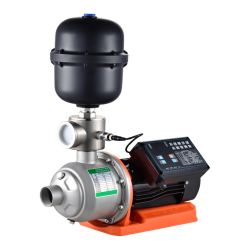
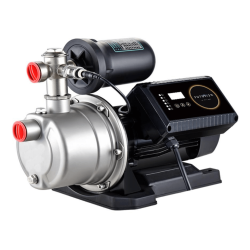
Lifting water from a well, tank or system to heads measured in tens of metres: 50–60 m on these machines through 25 and 40 mm outlets. Narrow lines and a tall column — the exact opposite of dewatering. Here solids are a problem rather than the norm.
An excavation after rain, water carrying sand, turbid seepage. The pump works immersed, so it needs no priming, and the TAX series draws down to 2 mm — effectively dry. Heads are low, 6–10 m, because the water is discharged beside the pit rather than onto a roof.
Material with solids and stones, with no electrical supply. Honda GX 160, GX 270 and GX 390 engines, outlets from 2" to 4", heads of 26–29 m. This is the only family that works on a site with no distribution board.
Liquid with sediment that settles on the bottom. An agitator at the inlet keeps it in suspension so the pump lifts it instead of drawing the water off the top. Heads of 15 and 30 m, because sewage is lifted into an existing installation.
| Family | Liquid | Max head | Outlet | Supply | Category |
|---|---|---|---|---|---|
| TAPM · TAAMG | clean water | 50–60 m | 25 · 40 mm | 230 V | clean water pumps |
| TAX | contaminated water | 6–10 m | 2" | 230 V | submersible pumps |
| TAPWA | sewage, sediment | 15–30 m | 2" | 230 / 400 V | submersible pumps |
| TA-HLS | slurry, large volumes | 26.3–29.1 m | 2" · 3" · 4" | petrol (Honda) | trash pumps |
The comparison shows a relationship that individual data sheets hide: the dirtier the liquid, the larger the outlet and the lower the head. A clean water pump lifts 60 m through a 25 mm line; a trash pump moves material through a 4" outlet but will not reach beyond thirty metres. That is not a difference in quality but in physics — large particles need a large bore, and a large bore lowers achievable pressure.
On site the first question is what can actually be plugged in. 230 V pumps — the whole TAX series and the smaller booster pumps — run from any socket, and they cover most dewatering work.
400 V appears where power exceeds what a single-phase installation can carry: here that means the 2.2 kW sewage pump with 30 m of head. Without a distribution board on site that machine is unusable whatever its specification.
A petrol engine answers the absence of electricity, not a shortage of power. A trash pump works in a field, during an outage and anywhere the supply is yet to be built — at the cost of noise, exhaust, and the fact that it must never be started in an enclosed space.
That question settles the family, and the family narrows the choice to a few models. Clean water, water with sand, settled sediment and slurry with stones need four different builds. A pump chosen for cleaner duty than it gets blocks within the hour; one chosen for dirtier duty will not reach the head required.
Head runs from the liquid surface to the discharge point. The quoted maximum is reached at zero flow, so real output is read at your own head — the full explanation is in submersible excavation pumps.
A 230 V socket, a 400 V board, or no power at all — that answer narrows the range faster than any hydraulic figure and saves you weighing up a machine you could not start.
A hose narrower than the outlet takes away most of the output while the pump runs perfectly normally and shows no sign of a fault. Diameter and length are chosen with the machine — covered in pump accessories.
The type of liquid decides, not the size of the job. Clean water from a well or tank means booster pumps with 50–60 m of head. Contaminated water in an excavation means submersibles of the TAX series, drawing down to 2 mm. Liquid with sediment and sewage need a pump with an agitator. Slurry with stones, and work without electricity, means trash pumps with Honda engines and outlets from 2" to 4".
Because large particles need a large bore, and a large bore lowers achievable pressure. A clean water pump lifts 60 m through a 25 mm line; a trash pump moves material through a 4" outlet but reaches under thirty metres. That is not a difference in quality but in physics — which is why one machine cannot replace both, whatever its engine rating.
A submersible rated for contaminated water — the TAX series: 0.6 or 0.8 kW, a 2" outlet, 6 or 10 m of head. Two features matter besides flow: suction down to 2 mm, effectively dry, and a float switch that stops the pump once the water has gone and protects it from running without cooling. Selection detail is in submersible excavation pumps.
How they work and how they are powered. A submersible runs immersed, needs no priming and draws down to a few millimetres, but requires electricity and lifts 6–30 m. A trash pump stands beside the water, draws through a suction hose, runs a petrol engine and moves large volumes with solids — it works where there is no power at all. It must never be started in an enclosed space.
Most run from a 230 V socket — the entire TAX submersible series and the smaller booster pumps. A 400 V supply is required by the 2.2 kW sewage pump with 30 m of head; without a distribution board on site it is unusable whatever its specification. Trash pumps need no electricity at all, and that, rather than engine power, is their real advantage.
Sand in suspension is handled by the TAX submersible series. Sediment already settled into a layer needs the version with an agitator, because an ordinary pump draws the water off the top and leaves the solids in place. Stones and large solids are the province of trash pumps, which have the bores for it, from 2" to 4". A clean water pump is not intended for any of these duties.
Because maximum flow and maximum head never occur together: the first at zero head, the second at zero flow. Real duty sits between them. The second cause is usually the hose — narrower than the outlet, or folded over the edge of an excavation, it takes away most of the output while the pump runs normally. Both mechanisms are covered in submersible excavation pumps and pump accessories.
It depends on the build. TAX submersibles draw down to 2 mm, so only a film remains, cleared with a wet and slurry vacuum or by hand. Pumps without that feature stop drawing at a few centimetres. A trash pump standing beside the excavation always leaves more, because it is limited by suction lift and by where the strainer sits.
Clean water and domestic systems are clean water pumps; excavation dewatering and sewage are submersible excavation pumps; slurry and work without power are trash pumps. Fire hoses and fittings are in pump accessories. Residual water on a floor is picked up by wet and slurry vacuums.
Essential cookies keep your cart and login working — the shop will not run without them. The rest let us measure traffic and target our ads, and we switch them on only with your consent. You can change your choice at any time using the “Cookie settings” link in the footer. Cookie policy
Essential
Cart, login, form security and remembering this choice. The shop will not work without them, so they need no consent.
Toolsa
Analytics
We count page views and checkout paths to find what is broken in the shop. We look at the data in aggregate.
Google Analytics · Microsoft Clarity
Marketing
We show our ads outside the shop and check which of them lead to a purchase. Phone callback requests land here too.
Google Ads · OptinMonster · Zadarma